I saw a sign at a restaurant yesterday that I found remarkable. It asked customers to keep a distance of 182 chickpeas.
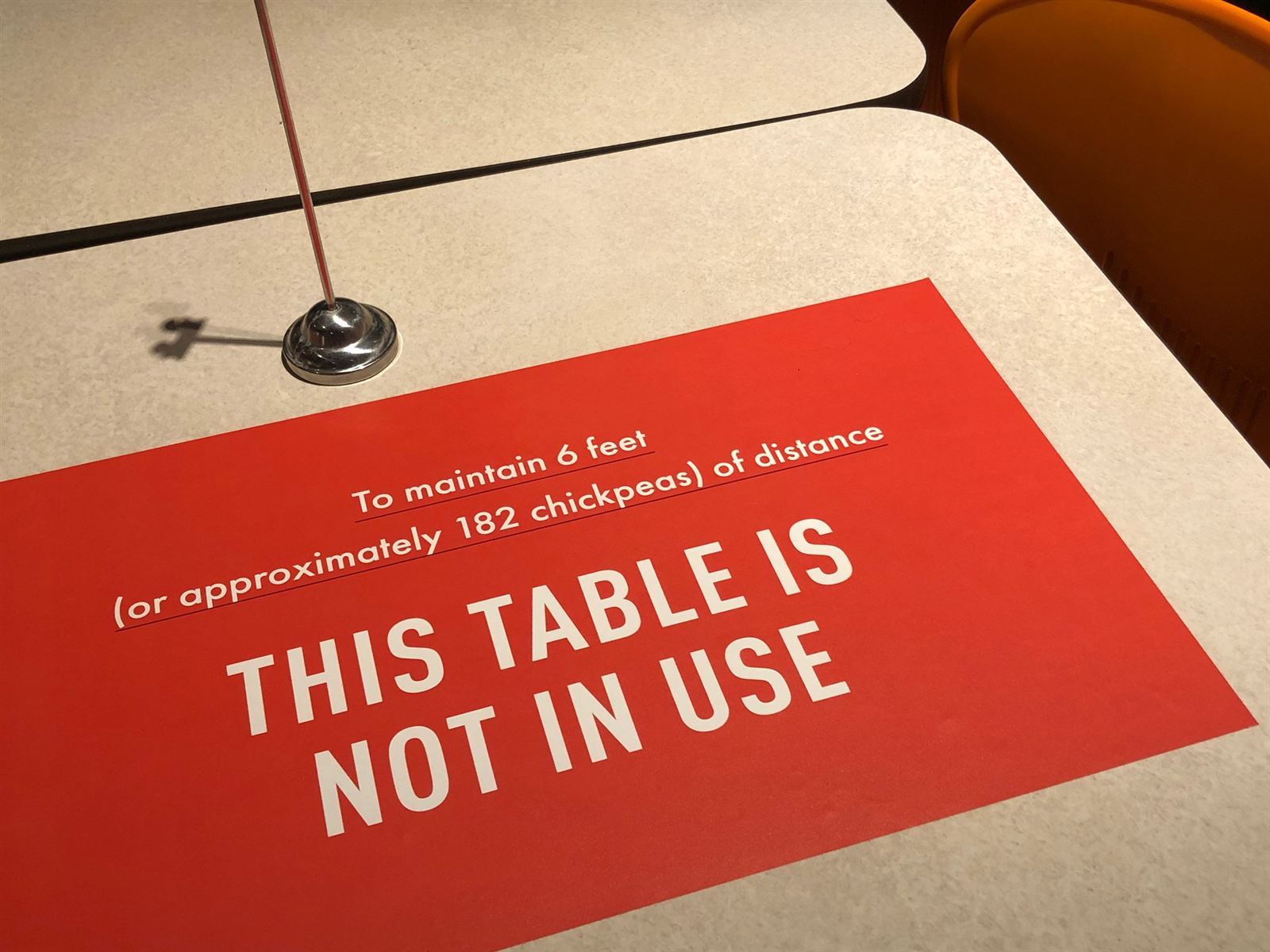
182 chickpeas of distance! It caught me by surprise and got my attention.
This is a simple, great example of clever system design.
It highlights an often overlooked truth: people can have a hard time understanding numbers. What is 6 feet of distance? If the sign maker wants customers to follow the rules, it helps to give them some assistance.
Before Covid, how often was I using “6 feet of distance” as an expression? Certainly not often enough to be fluent with it. It takes attention and mental effort to pick out two objects and do the head math to measure the line between them.
The task isn’t difficult, but it takes effort. And when you’re moving through the world at the pace we do today, it’s understandable that the mundane calculation of 6 feet gets forgotten.
If you’re building a system and care about the outcomes, it’s your job to set your users up to succeed.
So this restaurant did something I’d call quite clever. They got my attention with a surprising message and a bit of humor. I’ve been told about 6 feet of distance countless times these past few months, but this time I was told about 182 chickpeas! It cut through the noise and woke me up from my automatic fast-casual dining habit: first I pay for my meal, then I sit down to eat it. The sign’s purpose was to stop me from sitting at that table. And it worked.
Of course, the humor lies in the absurd idea that 6 feet would be easier to grasp as 182 chickpeas. Because chickpeas we are all certainly fluent in!
The tongue-in-cheek sign is also clever because it heads off potential conflict if a customer starts to sit at the off-limits table out of habit. They planned ahead, anticipated a tense moment and its emotions, and lightened the mood in advance.
Whatever system you’re designing, a restaurant or Salesforce for your company, it’s often the little things that shape how users respond, how they feel about the experience, and whether the system works.
I pay close attention to user behavior when building Salesforce systems, because user adoption is absolutely critical. Your employees are human, and they need tools that fit the way real humans behave.
A few books that shape my thinking on this, if you’d like to read more:
- Thinking, Fast and Slow by Daniel Kahneman
- Switch: How to Change Things When Change Is Hard by Chip and Dan Heath
- Decoding the Why by Nate Andorsky